
These surveys highlight that individuals with chronic conditions are less likely to be employed full-time or part-time compared to those without chronic conditions.
Survey 1.
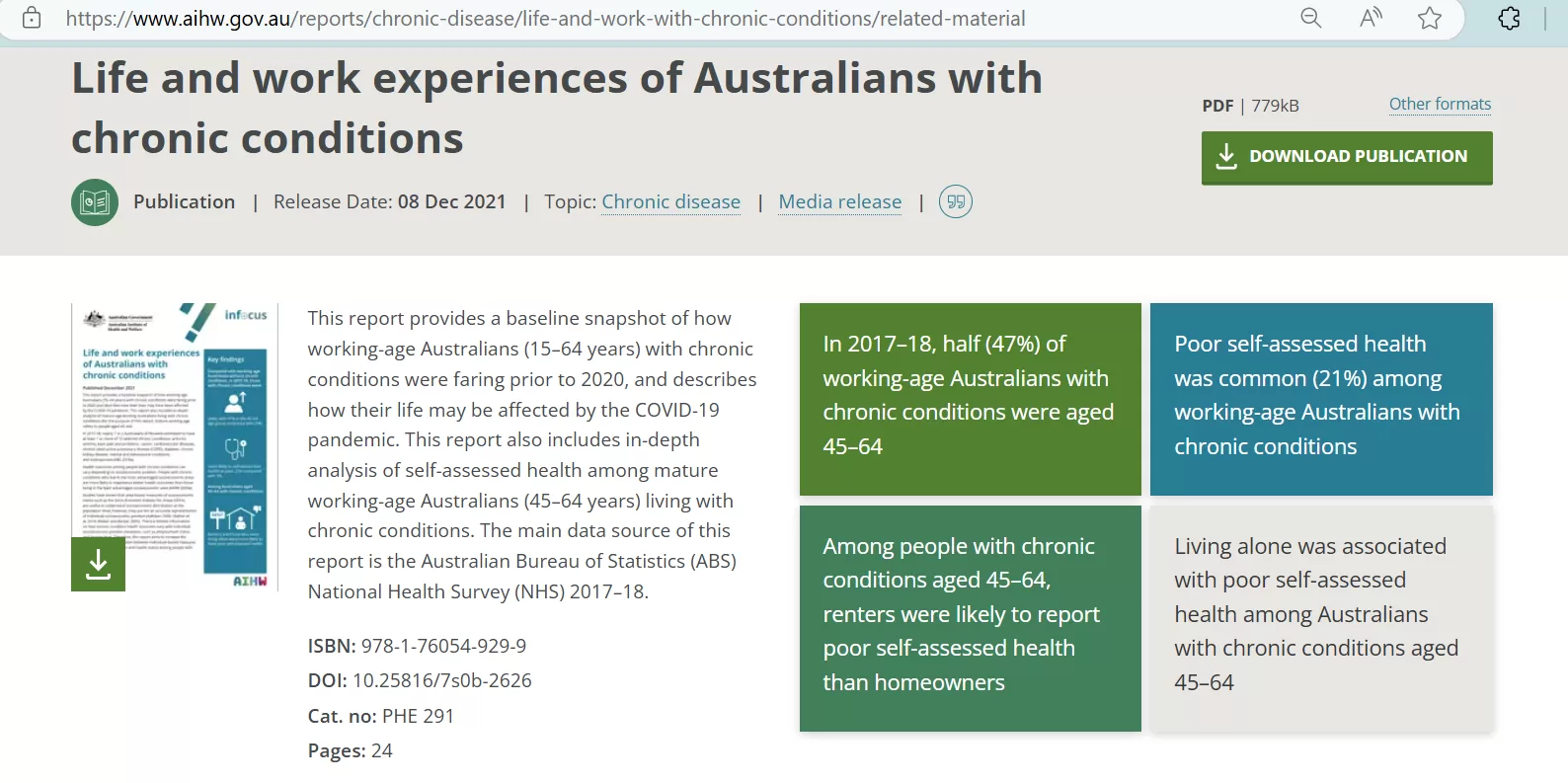
Life and work experiences of Australians with chronic conditions.
This notable survey is from the [Australian Institute of Health and Welfare](https://www.aihw.gov.au/reports/chronic-disease/life-and-work-with-chronic-conditions/summary), which provides insights into how chronic conditions impact the life and work experiences of Australians. This survey highlights that individuals with chronic conditions are less likely to be employed full-time or part-time compared to those without chronic conditions.
Survey 2.
Harvard Business Review Survey
Summary. HBR wanted to learn more about how people experience long Covid and other complex chronic medical conditions at work. In a survey that garnered more than 200 responses, we learned that while most non-ill respondents felt their employers were understanding of health issues, most chronically ill respondents disagreed. Chronically ill respondents also told us about the types of accommodations they’ve been able to access, barriers to those accommodations, and their knowledge that they can still achieve — even if the way they work looks different. We also heard from non-ill respondents who shared their strategies for creating more-inclusive organizational cultures.
Source: https://hbr.org/2024/05/survey-how-people-experience-chronic-illness-at-work